Thursday, May 14, 2015

Jake Teachey
May 13, 2015
History Essay
I pledge


How does the media affect the general population? What are some examples where the media had positively/negatively affected the population?


The media had always played a huge role in the way the population handles situations for hundreds of years, but more this has become more apparent in the last 70 years. There are many times in history where the general population is lead to believe something that is completely biased just because of what the newspapers/major news networks say about the issue. In this essay I am going to give a few examples some good, and some bad of how the media can affect the population.
My first example of this is the most current example, and that is the Michael Brown case involving the “police brutality” in Ferguson missouri. This is one of the most covered cases in the last 10 years by all of the major news networks, and that is exactly where the problem starts. Many of the networks shared different views of what actually happened, and if what the police did was right or wrong, so of course the people watching one network are going to believe different than what the people watching the other network believe. Where this becomes a problem is the contradicting viewpoints cause tension between the two opposing crowds, and because of this, in this case, it caused an uprising of many riots and people terrorizing the town. This proves the media definitely can have an affect on the population, and can cause problems when they openly portray two different viewpoints. Earlier this year when I visited Washington DC for a weekend I decided to go to the NEWSEUM, and one thing I found in the museum was a huge board that had a line down the middle of it. The top of the board said “Do you think the events in Ferguson were properly covered yes or no?”, and of course one side said yes and one side said no. It shocked me the amount of stickers people had placed on the side for the events not being covered correctly. The difference was truly staggering.
Not all events have a affect the population in a negative way like the events in ferguson did. One example of this is the Black Hawk Down mission in Mogadishu Somalia. This was arguably one of the times where media has affected the US population in a positive way the most. About 2 weeks ago I went to a hospital function with my dad, and it just so happened that the guest speaker was the only survivor from the black hawk that went down, Michael Durant. Michael Durant actually happens to live in huntsville, and in his speech he even expressed how helpful the media was for him. He said that the media saved him, what he meant by this is if the media did not publicize his hostage video then he would not be here today. A short two days after his hostage video was released the United States had and uproar of patriotism, which ultimately lead to his release from the somalians. This is great example how how media has positively affected the population.
Along with the Somali theme there is also media coverage which shows a negative image, and it is when the pictures of the dead American Soldiers being dragged through the streets. After the helicopter crashes 11 US troops were captured, and quickly beaten to death then dragged through the streets. This is an example of the CNN effect. "The CNN effect is a theory that seeks to explain the effect that 24-hour news networks, such as CNN, have on the general political and economic climate. Because media outlets provide ongoing coverage of a particular event or subject matter, the attention of viewers is narrowly focused for potentially prolonged periods of time. The CNN effect can therefore cause individuals and organizations to react more aggressively towards the subject matter being examined." (1) Since these images were so graphic and disturbing it let the US citizens realize how brutal things were in Somalia. This quickly lit a fire, and provoked anger towards the Somalis, and once again this is all because of the media.
One example which relates to dead bodies is actually not about what the media show, it's about what the media cant show. At the beginning of the Bush Administration President Bush instituted something called a “blanket ban”, what this was is the media was not aloud to take or share photographs of the American Flag draped coffins coming back into America. The main reason for this is the Government believed it would lessen the impact of pain the families of fallen soldiers would undergo. Another reason the government decided to do this was because they did not want the media to wrongly portray any footage of the coffins coming back home. This was a situation where the media was not aloud, to eliminate any chance of offending families of the fallen.
The last event I want to talk about is the best example of how the media can help, and it is the events of 9/11. The media did a remarkable job on covering the events of 9/11 from beginning to the end. The front pages of newspapers with photographs of the world trade center created a sense of community among the Citizens of the united states. All of the 24/7 news coverage talking about the crashes made americans want to go out and help. To go out and strengthen their community.
In conclusion the media can have a wide array of effects on the Population. Some of which positive, and some of which negative. I feel as if more often than not the media is actually a good thing, because it spreads awareness, and helps americans recover from tragic events. Without the media no one would know what was going on in the world, no one would be connected. In this case the positives definitely outweigh the negatives on the debate about media coverage.

The Media 9/11
This source provides great insight on the media coverage on 9/11. This source provided many example of the success of the Media during the events of 9/11.
9/11 Crash Footage
This is a primary source. This is a video of the planes crashing into the world trade centers.
Black hawk down
This is a article from AL.com. It gives information of the pilot from 
Black Hawk Down, Micheal Durant. I used it in my essay for the 3rd paragraph.
Micheal Brown
I used this source for my 2nd paragraph. It gives information on the micheal Brown shooting, and gives a interesting view point on the issue. 

Somalia Dead Body
This source was used when I was talking about the dead bodies being dragged through the streets of Somalia. Provided details on how tragic and the impact that had on the united states citizens.
NY times Blanket Ban
This source talks about the 18 year ban on the media being able to show coffins of our fallen soldiers coming back to the United States. It gave quotes from many different people on whether or not they thought removing this blanket ban would be a good idea.


Friday, May 1, 2015

Historical Inaccuracies in Film (Cinderella Man)

Jake Teachey
May 1, 2015
In Class Cinderella Man Write
Lawson US History
I pledge

The movie, Cinderella Man, takes place during the Great Depression, but it ultimately does a much better job of telling us an emotional and inspirational fairy tale about one man than it does exposing audiences to the facts about the Great Depression as it was experienced by most Americans.


            The movie Cinderella man is a historically accurate representation of what American had to undergo during The Great Depression, but has multiple alterations in the story of James J. Braddocks life. Many critics have analyzed the historical accuracy of the film, and all of them came to a unanimous decision that the film is historically accurate, aside from a few miniscule details. These details have only been altered in the film to strengthen the plot, and overall understanding of how hard the depression was on families all through out the United States.
            The first, and most interesting historically accurate fact about the film was that over 15 million people around the nation were unemployed. The director made a very interesting and powerful choice on how to portray this fact in the movie. If you were to watch closely enough during the beginning of the movie you see Braddock walking down the street, and then the camera quickly pans onto the ground to zoom in on the local paper with headlines record 15 million out of work. I think this is a great way of showing this, and tying in the factual side of the movie, it provides facts without drowning you in them.
            This movie was not all factually correct, and one of the most vivid examples of this is the portrayal of Max Baer. In the movie it portrays Max Baer as a ruthless fighter exhibiting inappropriate behavior. In real life Max Baer was nothing like this. He was a much more caring human being, and was not out just to break peoples necks. In the movie they also made it seem like Baer had killed 2 people in the boxing ring, but in reality he only killed one. I think the director added the second person into the story mainly to make the viewer not like Baer that much more. Another way the director attempted to make the viewer dislike Baer was by altering the Star of David that he so proudly wore. I think the director changed this star from such a vivid white on red background to more of a dark red on slightly lighter red background to not let the viewer really notice it. I think the director feared if the viewer were to see the star it would weaken his story because then Baer may of not been such an antagonist because he was simply fighting for a cause.
            Another place of inaccuracy in the film pertaining to Braddocks life is the scene when Jims son has his birth day, and Braddocks friend come up drunk and angry at the world. What is interesting is Braddocks wife, Mae, later wrote in a biography that one day Jim came to the church and had seem to of been completely broken down. It is interesting that the directors chose to swap Braddock out with his friend in this scene, and I think this is because he did not want the viewers to see Braddock in such a negative type of way, he wanted Braddock to be the role model, and to not have any negative sides about him. Ron Howard (director) wanted Braddock to be a person that America could look up to.
            Overall this entire movie is solid representations of how hard times were in America, but not so much about the representation of Braddocks actual life. That being said I do still agree with the changes that the director made, because it added depth and strength to the story line. If he would of kept everything exactly how it was in real life it would not of been as exciting, and enticing.


SOURCES


Thursday, March 12, 2015

Birmingham Civil Rights Trip

      What I learned on this trip is there is two people in this world that world that want the most of me, and that is my mother and my teacher. The difference is when you get to see the church where the bombing actually occurred it makes you realize how real everything really was. No this did not change my view, I say this because before even going down there I knew how bad everything was, so in a way I guess you could say it made me more sympathetic because it made you realize people actually had to live through these tragic events.
       It is important to go on this trip because when you get to see something in person it creates a much stronger connection then just looking at a screen. If you get to see, touch, and feel the site or object were it happened it makes the whole experience much more memorable. If I was just to watch the video you showed during class then I would've enjoyed it, and thought it was a powerful topic. Since we actually got to go and see everything that was in that video I feel as it is something I will never forget. If civil rights ever get brought up in a discussion I will now be able to say that I have been to the infamous "Bombingham" and seen 16th street baptist church. I feel as the field trip created a strong, personal, and intimate connection with the topic.

Monday, March 2, 2015

Annotated sources

I used this source when I referred to when the soldiers came into the harbor in Australia with over 250,000 people there to see the Fleet. This helped to give a specific example on how the Fleet was more of a tourist attraction than a war fleet.
This source was used to give specific numbers and details about the voyage. It helped to clarify how incredible and vigorous the voyage was.
Even Though I did not use this source much, I still had a note card from it which listed all of the 16 different battle ships. This was important because It let you know the names of all of the Ships in the Fleet.
I used this source to gain details of the itinerary of the great white fleet. It has a map that lays out every stop the fleet made. It was helpful to see a visual representation of the voyage.
This source was helpful because it gave a list of important dates from the voyage. The date I used from this source was the departure date.
To be honest the only reason I used the text book as a source is because it was mandatory, there was maybe 2 lines in the entire book about The Great White Fleet. The book was useless.

In-Class

Jake Teachey
March 2, 2015
US History B
Great White Fleet
I pledge

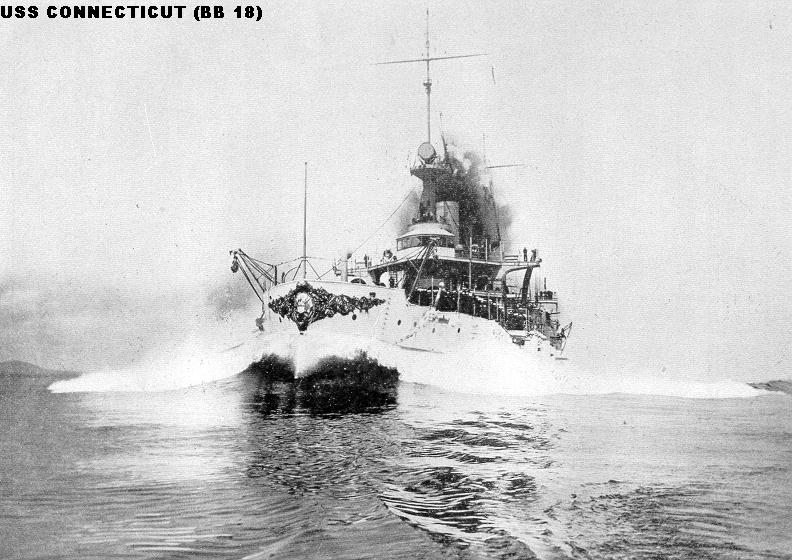
The Great White Fleet was an Armada of 16 ships that Theodore Roosevelt commenced in 1907. There were many reasons why Theodore Roosevelt decided to send a convoy around the world, but one of the most widely known was to show the world that America was not lacking in the navy department, and that the other nations did not need to mess with the United States Navy. The Great White Fleet symbolized power for the United States.
            The name “The Great White Fleet” was not assigned until after the ships had sailed their course. One of the more obvious reasons on why this name was chosen is because the ships were white in color. The crew on the Great White Fleet felt famous in a way. The fleet turned into more of a sight seeing tour than a defense mechanism. For example, August 15 1908 the fleet arrived in Australia, and when the ships arrived in port they were greeted by more than 250,000 people who had stayed up the entire night before waiting on the arrival of these famous white ships. The following 8 days after arrival the citizens of Sydney Australia threw a 8 day non-stop party for the crew members of the fleet.
            The fleet launched on December 16, 1907 to serve as a symbol of strength and power for the United States. Roosevelt claimed that the purpose of the fleet was to have a fleet of military ships circumnavigate the globe. Despite what Roosevelt claimed everyone knew that the main purpose of the fleet was for intimidation. The fleet served more as a parade of intimidation sailing around the world from country to country to show the world we weren’t to be messed with. This tactic of intimidation was actually remarkably successful because word spread about this “great white fleet” around the globe and put a sense of fear into nations hearts.
            The Great White fleet is arguably one of the biggest most successful things that have ever happened to the US navy.  With that being said it was not all sunshine and rainbows in the end. The construction of the ships was not as good as they looked. From the out side the ships looked grand and almost majestic in a way, but there were areas that lacked interest on the inside. An example of this is two of the 16 ships did not complete the voyage due to major mechanical malfunctions, but that also could be because not all of the ships were brand new ships. From 1904 to 1907 the United States built 11 brand new ships, meaning 5 out of the 16 ship in the fleet were refurbished battle ships.
            The journey these ships went on is as great as the ships themselves. Over 14 months these ships said 43,000 nautical miles around the globe. The voyage included over 20 stops in 6 different continents. The fleet was the first United States navy vessel to navigate around the entire globe. This is proof that the boats were really just used as a parade to show off to the world how “big and bad” the States Navy was.
            In conclusion there was not really a meaningful reason on why the Great White Fleet existed other than an intimidation factor. Although it may not of had a credible war-related history it still served its purpose remarkably well. It did wake up other countries and let them know that the US Navy was not one to mess with.


GWF #1.jpg
The Great White Fleet Crosses The Atlantic Ocean


gwf-bc.jpg
USS Connecticut

Great White Color.jpg

Great White in Color

GWF CREW.jpg

Crew of the USS Virginia

Theodore Roosevelt GWF.jpg
Theodore Roosevelt with The Great White Fleet